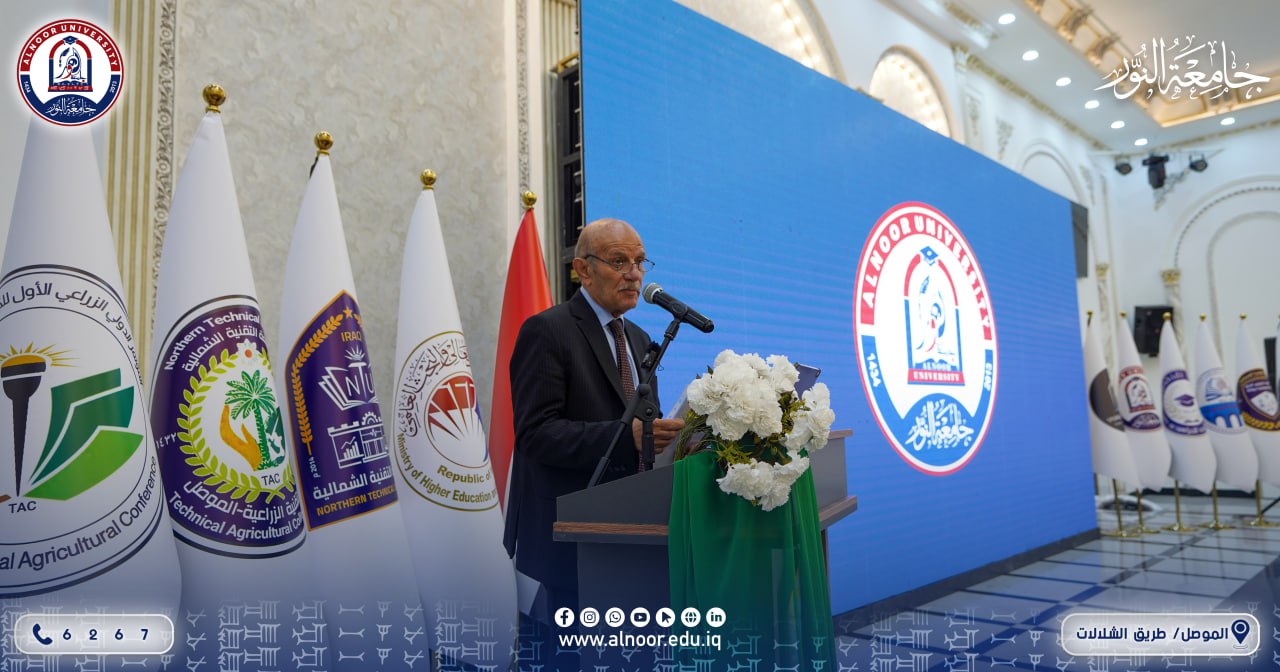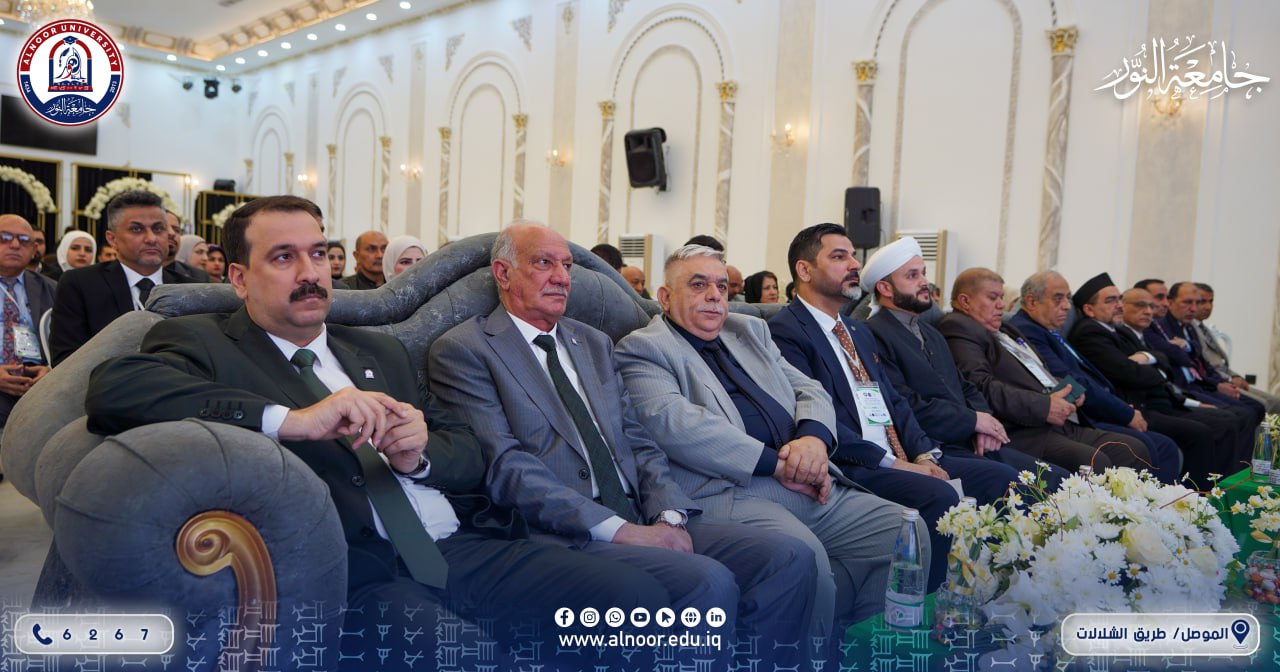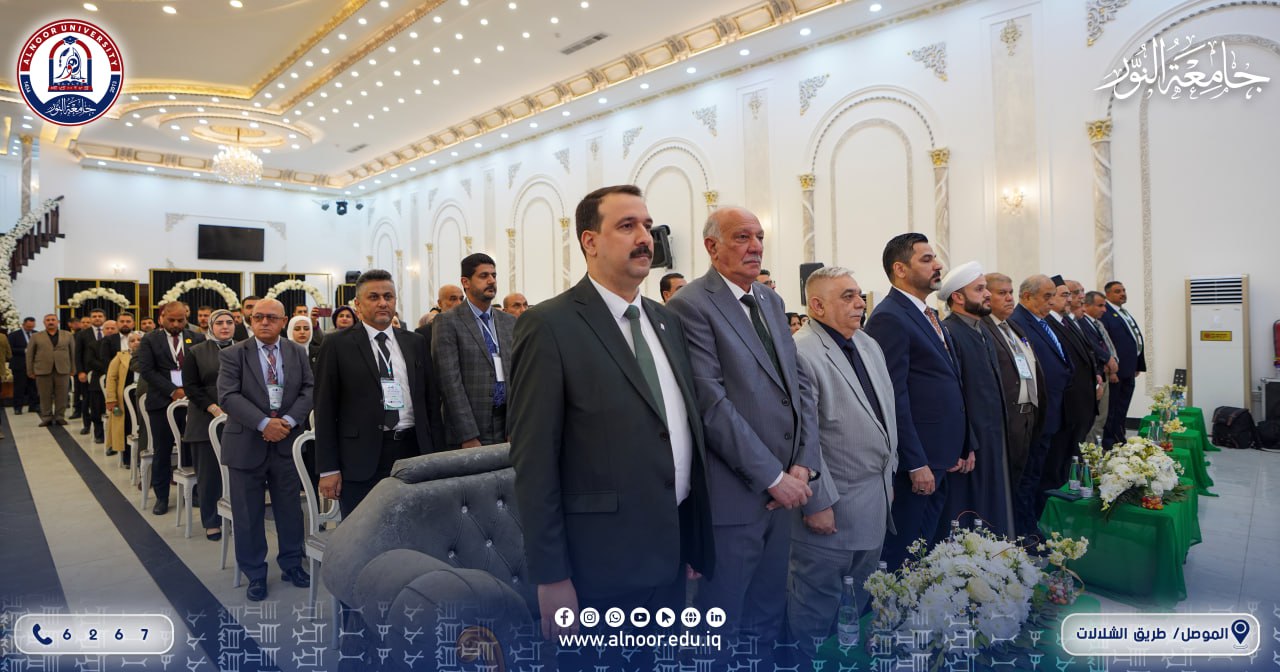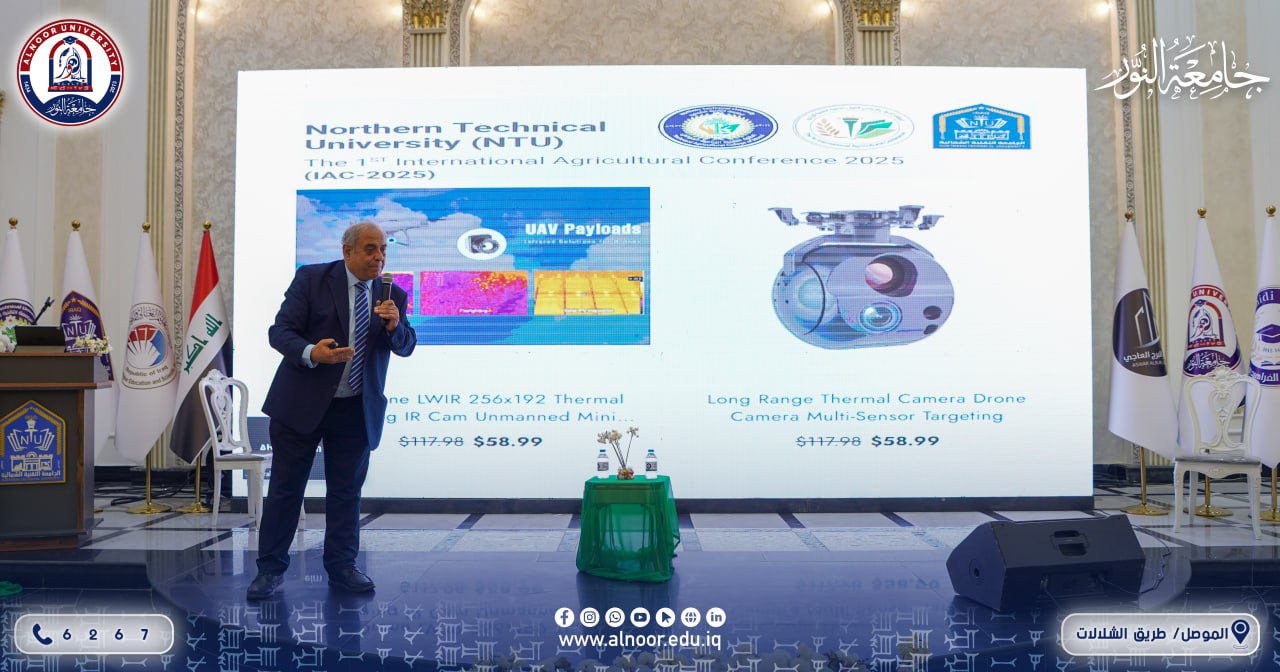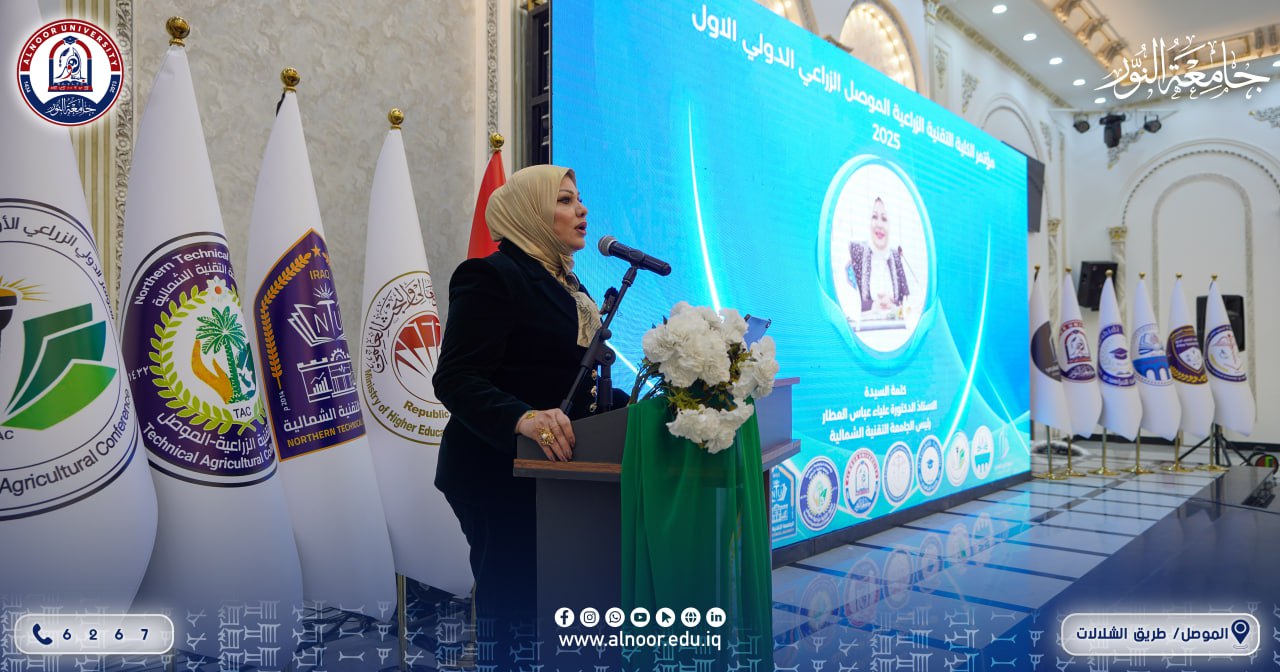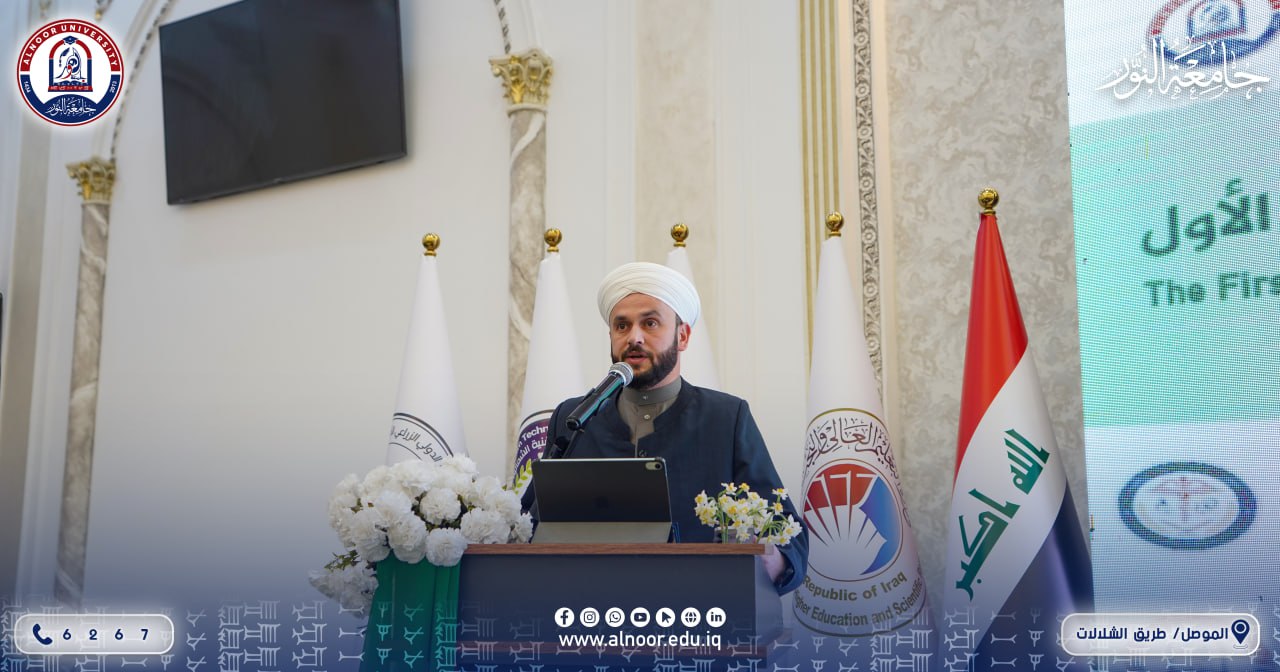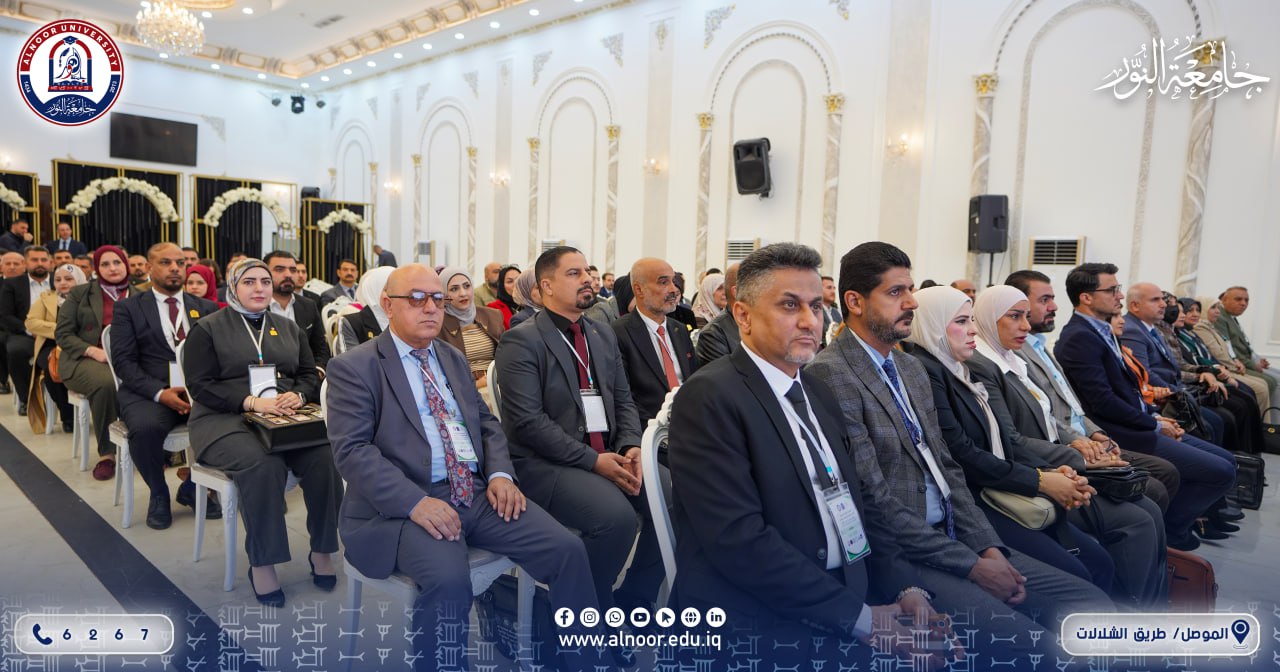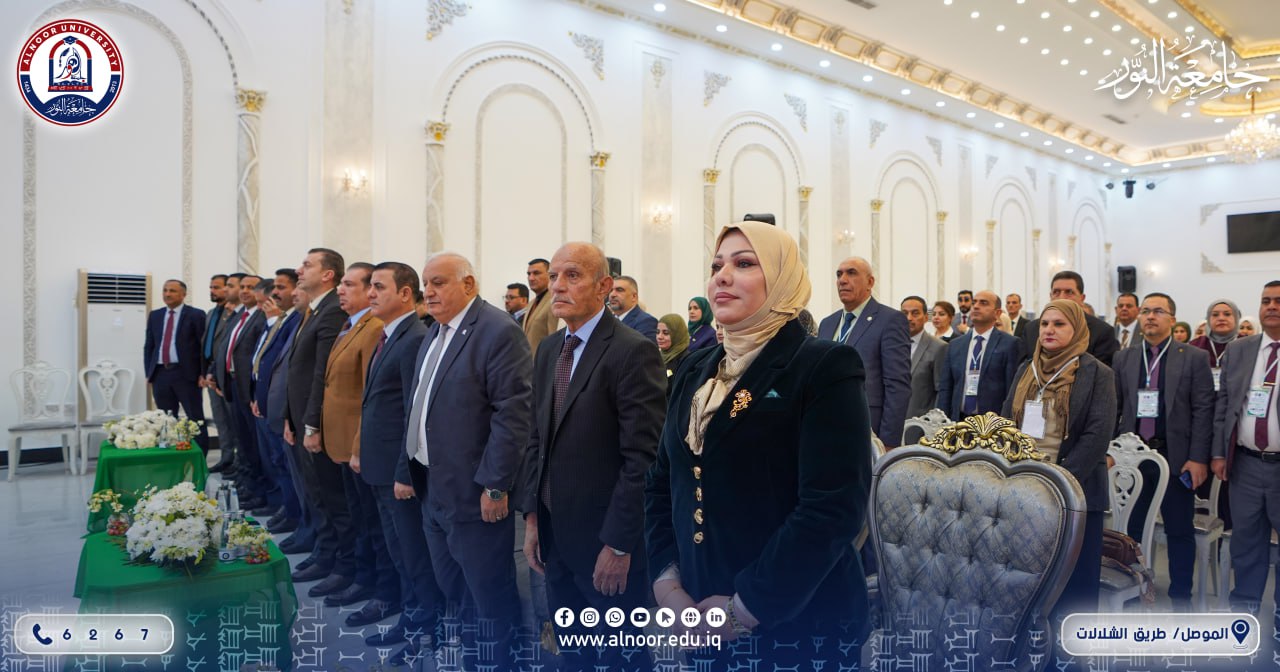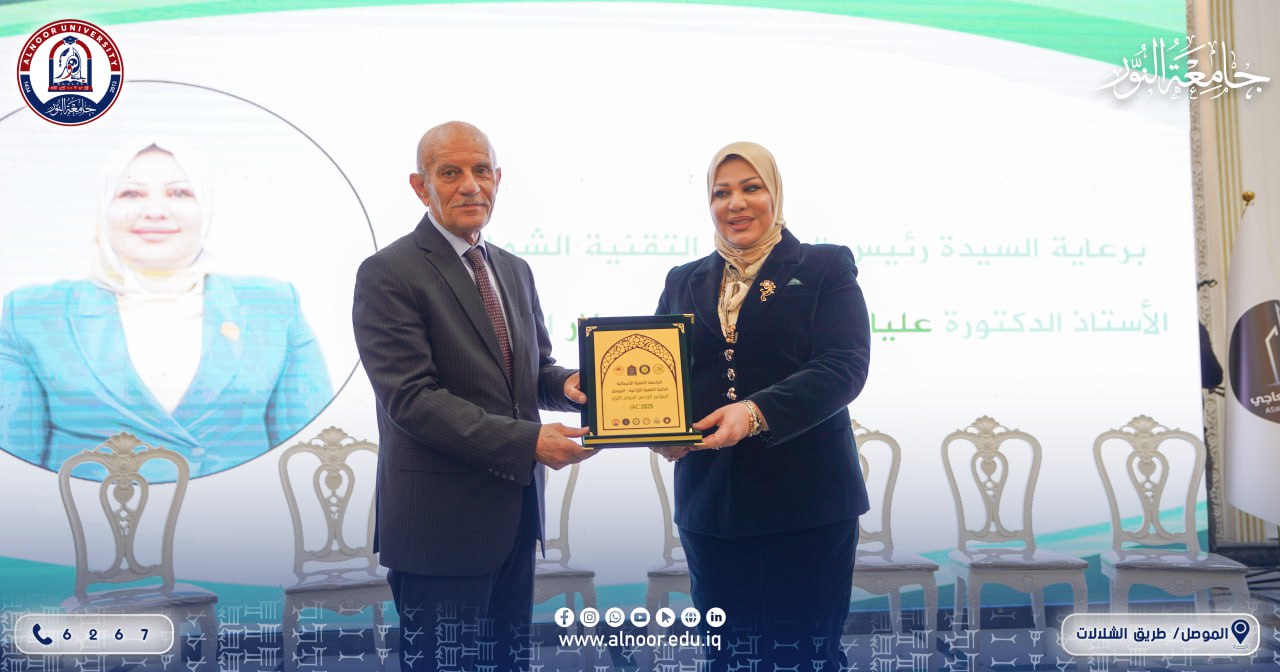
Alnoor University participated as a partner and organizer in the activities of the First Agricultural Conference (1st IAC 2025), which commenced on Wednesday, 3/12/2025, at the Scientific Forum Hall of the Northern Technical University in Mosul. The organization of this conference comes within the framework of enhancing scientific cooperation among Iraqi universities and supporting applied research in the fields of agriculture, food security, and climate change. Attending the first-day sessions on behalf of Alnoor University were Professor Dr. Yassin Taha Alhajjar, President of the University; Professor Dr. Ismail Abdulwahab Ismail, Scientific Assistant to the President of the University; Dr. Munir Salim Albadrani, Scientific Advisor to the University; in addition to Professor Dr. Kamel Ali Abdulmohsen, Dean of the Technical Engineering College, and Professor Dr. Khazal Fathi Zaidan, Dean of the College of Education. The President of Alnoor University delivered the opening speech on behalf of the university, in which he welcomed the participants and guests, affirming the university’s commitment to being an active partner in organizing specialized scientific conferences and supporting research initiatives aimed at developing the agricultural sector in Iraq and keeping pace with global developments in this field. The program of the first day included a series of keynote lectures. Professor Dr. Samir Madwar (Lebanon) delivered a lecture on the use of smart technologies in modern agriculture and their impact on reducing production costs and improving the quality of field crops. This was followed by a lecture by Professor Dr. Abdul Sattar Asmir Jassim Aljurijawi on the future impacts of climate change on cereal crop cultivation in Nineveh Governorate. Professor Dr. Abdul Rahim Al-Taie also spoke about his experience in scientific publishing in agricultural and veterinary journals and the role of specialized research in developing this sector. The keynote sessions concluded with a lecture by Dr. Shatha Ayyad Youssef on techniques for detecting genetic modifications, in which she reviewed her experience in genetic mutation projects and the production of improved varieties of wheat and barley.



 English
  العربية